
Cut-and-Sew vs. Ready-Made Sportswear: Which Is Better for Your Brand?
Every sportswear brand reaches this fork in the road. One path is fast, cheap and low-risk. The other is slower, costlier and gives you a product nobody else can copy. This guide breaks down cut-and-sew versus ready-made manufacturing — cost, MOQs, fit control, fabric choice, branding and which model matches your brand stage.
Most new sportswear brands start the same way: they find a blank garment they like, add a logo, and launch. It works. It is fast, affordable and low-risk. But at some point — usually when the brand starts to gain traction — the limitations become impossible to ignore. The fit is not quite right. The fabric pills. A competitor is selling the same blank with a different logo.
That is when the question arrives: should we move to cut-and-sew manufacturing?
The answer is not the same for every brand. Cut-and-sew and ready-made manufacturing serve different purposes at different stages. One is a launchpad. The other is a foundation. This guide explains both models clearly — the costs, the minimums, the timelines, the control you gain and the trade-offs you accept — so you can make the right decision for where your brand is right now.
Quick Answer: Which Should You Choose?
Choose ready-made if you are testing a concept, have a limited budget, need product in hand within weeks, or are decorating basics like tees and hoodies with graphics. You accept a standard fit, standard fabric and a product that shares its construction with other brands.
Choose cut-and-sew if you need a proprietary fit, custom fabric weight and composition, specific construction details, your own size grading and a product that cannot be copied by anyone using the same blank supplier. You accept higher MOQs, higher upfront cost and a longer development timeline.
The most practical path for many brands is sequential: start with ready-made to validate demand, then transition to cut-and-sew once you know what your customers actually buy.
Ready-made is a launch tool. Cut-and-sew is a brand tool. Ready-made gets you to market fast and teaches you what sells. Cut-and-sew gives you a product that is genuinely yours — and protects your margin as you scale.
Do not choose cut-and-sew because it sounds more professional. Choose it because your product requires control over fit, fabric or construction that a blank cannot deliver.
What Is Cut-and-Sew Manufacturing?
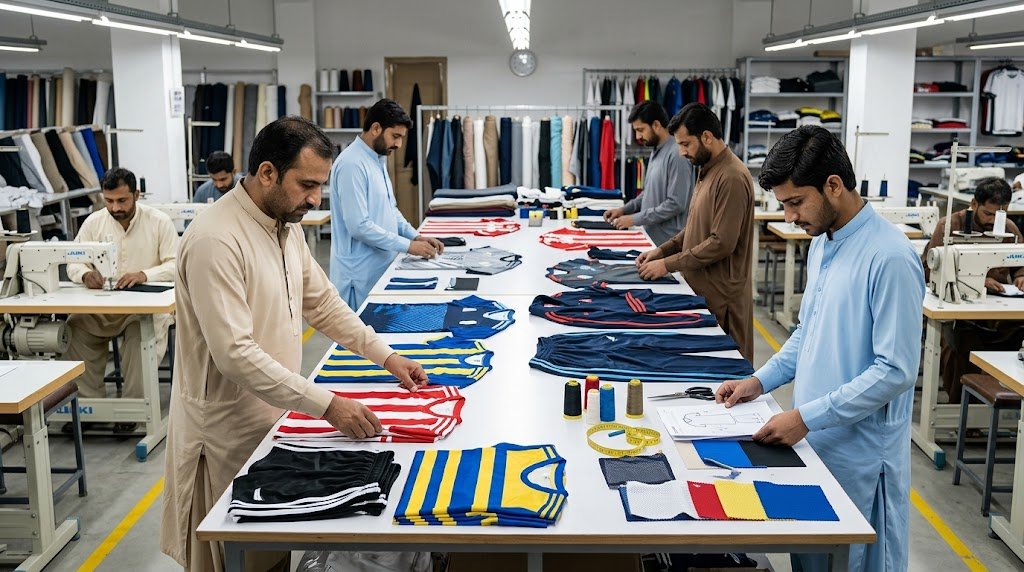
Cut-and-sew manufacturing means the garment is built from fabric rolls rather than purchased as a finished product. The process typically follows this sequence:
- Design and tech pack — the brand defines the garment in technical terms: measurements, fabric, GSM, stretch direction, seam types, trims and packaging.
- Fabric sourcing — the manufacturer sources or develops the fabric to the specified composition and weight.
- Pattern making — a pattern is created from the measurements and grading rules in the tech pack.
- Prototype and fit sample — a physical sample is produced, worn, assessed and revised until approved.
- Cutting — fabric panels are cut from the approved pattern.
- Sewing and assembly — panels are sewn together with the specified seam types and construction details.
- Decoration — printing, embroidery or other branding is applied.
- Finishing and quality control — labels, trims, inspection and packing.
This is how every major sportswear brand operates — Nike, Gymshark, Lululemon and Supreme are all cut-and-sew businesses[reference:0]. The tech pack defines the product, and the factory executes it.
What Is Ready-Made Manufacturing?
Ready-made — sometimes called blank or stock apparel — means buying garments that have already been cut, sewn and finished by another manufacturer, then adding your branding through printing, embroidery, heat transfer or labels[reference:1]. Common ready-made products include t-shirts, hoodies, sweatshirts, polo shirts and basic sportswear[reference:2].
The appeal is obvious. You skip garment manufacturing entirely and focus only on the branding layer. Lower risk, lower minimums and faster turnaround — you can have product in hand in a week or two[reference:3].
The drawback is equally clear. Your garment is identical to thousands of other brands using the same blank. The fit, fabric, construction and details are not yours — they belong to the blank manufacturer. The only thing distinguishing you is the graphic on the front[reference:4].
Cut-and-Sew vs. Ready-Made: Side-by-Side Comparison
The table below compares the two models across the factors that matter most when choosing a production route.
| Factor | Cut-and-Sew | Ready-Made (Blanks) |
|---|---|---|
| Fabric Control | Full control over composition, GSM, hand feel and finish | Limited to available blank options |
| Fit Control | Custom pattern, grading and size block | Fixed to the blank manufacturer's fit |
| Colour Control | Lab dip, bulk dyeing, garment dye possible | Limited to stock colour availability |
| Upfront Investment | High — pattern, sampling, fabric sourcing | Low — no development cost |
| MOQ (per style/colour) | Typically 150–500+ units | Often 1–50 units, sometimes lower |
| Lead Time | 8–14 weeks including sampling | 1–3 weeks from stock |
| Unit Cost at Volume | Lower — you pay manufacturing cost | Higher — you pay wholesale markup |
| Product Uniqueness | High — your garment is proprietary | Low — shared construction with other brands |
| Brand Differentiation | Strong — fit, fabric and details are yours | Mainly visual — logo and packaging only |
| Reorder Consistency | High if specification is documented | Dependent on blank availability |
Cost: Where the Money Actually Goes
The cost conversation around cut-and-sew versus ready-made is often oversimplified. It is not just about unit price — it is about total landed cost and margin structure.
Ready-made: lower barrier, higher unit cost
Ready-made launches can often be started with a much lower upfront investment — sometimes in the low thousands depending on quantity and decoration[reference:6]. You are not paying for pattern development, fabric sourcing, sampling or fit revisions. But you are paying a wholesale markup on every unit, and that markup never decreases as you scale.
Cut-and-sew: higher upfront, better long-term economics
Cut-and-sew requires substantially higher upfront investment — often ranging from several thousand dollars into the tens of thousands depending on fabric type, number of styles and sampling rounds[reference:7]. But at volume, the unit cost drops because you are paying the actual manufacturing cost rather than a wholesale margin.
| Cost Component | Cut-and-Sew | Ready-Made |
|---|---|---|
| Pattern development | Required — one-time cost | Not required |
| Fabric sourcing | Required — MOQ applies | Included in blank cost |
| Sampling | Required — 1–3 rounds typical | Not required |
| Unit cost at 100 pcs | Higher per unit due to setup | Lower per unit (stock garment) |
| Unit cost at 1,000+ pcs | Significantly lower per unit | Same markup applies |
| Decoration | Quoted separately | Quoted separately |
| Labels and packaging | Fully customisable | Often limited to relabeling |
Minimum Order Quantities: The Practical Barrier
MOQs are often the deciding factor for new brands. Ready-made blanks frequently have no minimum beyond a case pack — sometimes as few as 12 pieces per style. Cut-and-sew factories typically require higher minimums, structured by style, colourway or fabric programme[reference:8].
Typical ranges in the industry:
- Ready-made blanks: Often 1–50 units per style, sometimes no minimum beyond a case pack[reference:9].
- Cut-and-sew (stock fabric): Typically 100–300 units per style[reference:10].
- Cut-and-sew (custom fabric): Often 300–500+ units per style, because fabric MOQs apply[reference:11].
- Complex construction (moulded cups, bonded panels): Higher still, due to tooling and process setup.
Lead Times: Speed vs. Development
Ready-made wins on speed. If the blank is in stock, you can have branded product ready within one to three weeks[reference:12]. This is ideal for event merchandise, seasonal drops, quick-turn client orders and concept testing.
Cut-and-sew requires development. From initial design to bulk delivery, the timeline can stretch to 8–14 weeks or longer, depending on fabric sourcing, sampling rounds and production queue[reference:13]. This extended timeline requires planning and capital to sustain operations during development.
Quality Control: Who Owns the Risk?
With ready-made, you depend on the blank supplier's consistency in fit, construction, fabric performance and colour continuity. Your quality control focuses on the decoration process — ensuring your prints, embroidery and finishes meet your brand's standards[reference:14].
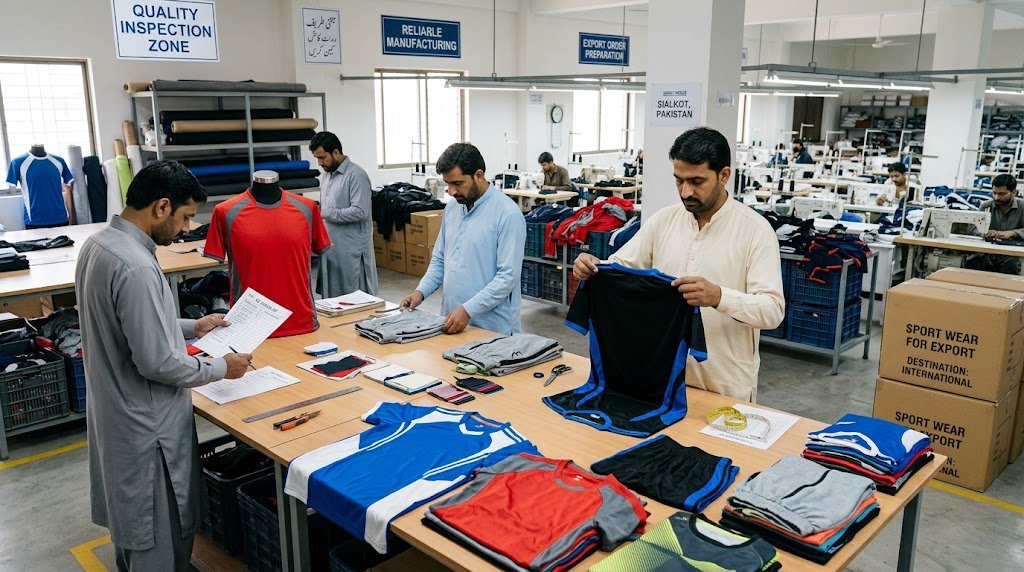
With cut-and-sew, you have greater control over key garment variables, but you also carry greater responsibility. You must establish quality control protocols at every stage — fabric inspection, cutting, in-line sewing, decoration and pre-shipment[reference:15]. A reliable manufacturer will have these systems in place, but you need to verify them.
This is where the manufacturer's process discipline becomes part of your product. If you want to understand what reliability looks like in a cut-and-sew partner, the guide on what makes a sportswear manufacturer reliable for international brands covers the certifications, quality systems and communication standards to look for.
Branding and Differentiation: The Real Long-Term Cost of Blanks
The strongest argument for cut-and-sew is not cost — it is ownership. When you cut-and-sew, your fit is yours. Your fabric is yours. Your construction details — the waistband width, the pocket placement, the seam type — are defined by you and distinguish your product from every competitor[reference:16].
Customers who love your fit become loyal customers because they cannot get that exact fit anywhere else. That loyalty is the foundation of a defensible brand.
With ready-made, the only thing distinguishing your product is the graphic. That is a legitimate strategy for merchandise, promotional products and creator brands. But it has a ceiling. If your business depends on customers choosing you specifically — for your fit, your fabric, your product experience — ready-made will eventually hold you back.
Decision Framework: Which Model Fits Your Brand Right Now?
You Are Launching a New Brand With Limited Capital
Ready-made is the right choice. You need to validate demand before committing to patterns, fabric MOQs and sampling costs. Launch with a small blank order, test which designs and colours sell, and gather customer feedback on fit. Once you know what works, you can invest in cut-and-sew with confidence.
You Need a Proprietary Fit for Performance Leggings
Cut-and-sew is the right choice. Leggings depend on stretch recovery, opacity, waistband tension and size grading. A blank legging will not deliver the fit or performance your customers expect. You need control over fabric composition, GSM and pattern construction. The guide on manufacturing custom performance leggings for activewear brands covers the full specification process.
You Are Producing Teamwear for Schools and Clubs
Cut-and-sew is usually the right choice — especially if you are producing sublimated jerseys, training wear or jackets. Teamwear requires consistent sizing across a range of styles, durable construction and roster personalisation. The guide on building a successful custom teamwear collection covers how to structure that range.
You Are a Gym or Studio Ordering Staff Apparel
Ready-made is often sufficient. You need branded tees, hoodies or tanks for staff and members. The fit does not need to be proprietary, and the order volume is usually low. Ready-made gives you fast turnaround at a reasonable cost.
You Are Expanding From Blanks to a Full Collection
This is the transition point. You have validated demand, you know your bestsellers, and you are ready to build a product that is truly yours. Start with one or two hero styles in cut-and-sew, keep your best-performing blanks in the range, and expand the custom line as sales grow.
Practical Examples: Two Brands, Two Paths
A Streetwear Brand Starting With Blanks
A designer launches a small streetwear label with graphic tees and hoodies. Budget is limited and they want to test the market before committing to manufacturing. They source heavyweight blanks from a wholesale supplier, add screen-printed graphics and launch online. The tees sell well; the hoodies do not. Because they used blanks, they only lost money on unsold hoodies — not on pattern development or fabric MOQs. Six months later, they move their bestselling tee design into cut-and-sew with a custom 240 GSM cotton and a boxier fit that no blank could offer.
A Performance Brand Building From the Ground Up
A running brand wants to launch a compression legging and a matching sports bra. They know from the start that fit and fabric performance are the product — a blank legging would not sell. They work with a cut-and-sew manufacturer to develop a four-way stretch nylon-spandex fabric at 240 GSM, a custom waistband and a proprietary size block. The development process takes four months, including two sample rounds and a wear test across five sizes. The MOQ is 300 units per style. The unit cost is higher than a blank initially, but as the brand scales past 2,000 units, the margin advantage becomes substantial. More importantly, the product is theirs — and no competitor can copy it by ordering the same blank.
Where Habit Fit Sports Fits Into Your Manufacturing Decision
Habit Fit Sports manufactures custom sportswear from Sialkot, Pakistan, for activewear brands, private-label businesses, gyms, schools and teams. The company specialises in cut-and-sew production — building garments from fabric to finished product to the brand's specification.
Product capabilities include custom sports bras, custom performance leggings and yoga pants, custom letterman jackets for schools and teams and custom BJJ gis for brands, gyms and teams. Brands building a full collection can source multiple product categories from one manufacturer, which keeps fabric, sizing and branding consistent across the range.
On the decoration side, the company provides direct-to-film (DTF) printing for detailed logos and branding, reflective tape manufacturing for visibility and design accents, and 3D embossing for textured fabric finishes.
If you are considering a move from ready-made to cut-and-sew, or you are planning your first custom production run, you can review how the production process works, read the guide on what makes a sportswear manufacturer reliable for international brands, or contact the Habit Fit Sports team to discuss fabric, sizing, decoration and order requirements. The full range of services is listed on the Habit Fit Sports homepage.
Frequently Asked Questions
What is the main difference between cut-and-sew and ready-made?
Cut-and-sew means building the garment from fabric to your specification — you control the fit, fabric, construction and details. Ready-made means buying a pre-manufactured blank garment and adding your branding. With cut-and-sew, you customise the garment. With ready-made, you customise an existing garment[reference:17].
Is cut-and-sew always more expensive than ready-made?
Not necessarily. Cut-and-sew has higher upfront costs — pattern development, sampling, fabric MOQs — but the unit cost drops at volume because you pay the actual manufacturing cost rather than a wholesale markup. At low volumes, ready-made is cheaper per unit. At scale, cut-and-sew becomes more cost-effective.
What MOQ should I expect for cut-and-sew sportswear?
Typical cut-and-sew MOQs range from 100 to 300 units per style when using stock fabric, and 300 to 500+ units per style when custom fabric is required. Complex construction — such as moulded cups or bonded panels — may require higher minimums due to tooling.
How long does cut-and-sew production take?
From design to bulk delivery, cut-and-sew timelines typically run 8 to 14 weeks, including fabric sourcing, sampling, revisions and production. Ready-made orders from stock can be completed in one to three weeks. Peak season adds time to both.
Can I start with ready-made and switch to cut-and-sew later?
Yes — and it is one of the most common and sensible paths. Many brands launch with ready-made to validate demand and gather customer feedback, then transition their bestselling styles into cut-and-sew once they have sales data and capital. The blank stage funds the custom stage.
What kind of products require cut-and-sew manufacturing?
Products that depend on proprietary fit, custom fabric performance or specific construction details — such as performance leggings, sports bras, compression wear, sublimated teamwear, letterman jackets and BJJ gis — almost always require cut-and-sew. Ready-made blanks cannot deliver the fit, fabric or construction these products need.
Does cut-and-sew give me better quality control?
Cut-and-sew gives you more control over the garment's specifications, but it also requires you to establish quality control protocols at every stage — fabric inspection, cutting, sewing, decoration and pre-shipment. A reliable manufacturer will have these systems in place. Ready-made quality depends on the blank supplier's consistency; your QC focuses only on decoration.
What is the biggest mistake brands make when choosing between the two?
Staying with blanks for too long. Blank apparel is a launchpad, not a destination. Once your brand has proven demand and you know what your customers want, continuing to use a shared blank limits your differentiation, your margin and your ability to build a defensible product identity.
What to Remember
Cut-and-sew and ready-made are not competing philosophies — they are tools for different stages of a brand's life. Ready-made gets you to market fast, tests demand and generates the revenue that funds future development. Cut-and-sew gives you a product that is genuinely yours — a proprietary fit, a custom fabric, a construction that competitors cannot replicate.
The right choice depends on your stage, your budget, your product type and your ambition. If you are launching and need speed, start with ready-made. If you are building a performance brand that depends on fit and fabric, go cut-and-sew. And if you are somewhere in between, start with ready-made and plan your transition.
Habit Fit Sports specialises in cut-and-sew sportswear manufacturing for brands, gyms, schools and teams. If you are ready to move beyond blanks and build a product that is truly yours, the best next step is to start a conversation about your product and your requirements.
Ready to Make the Move to Cut-and-Sew?
Whether you are transitioning from blanks or starting your first custom production run, Habit Fit Sports can help you develop a product that is genuinely yours.
Start Your Custom Project See How Production WorksHave a specific product or fabric in mind? Get in touch to discuss fit, fabric, decoration and minimum order quantities.