

How Clothing Brands Can Reduce Production Errors Before Bulk Manufacturing
Most production errors are not caused by bad factories. They are caused by unclear specifications, skipped sampling rounds and assumptions that were never confirmed in writing. This guide covers the practical steps brands take before bulk production — tech packs, pre-production samples, fabric approval, fit testing, QC checkpoints and size grading — to catch problems while they are still cheap to fix.
Every brand owner who has produced apparel has a story about a bulk order that arrived wrong. The colour was slightly off. The fabric was lighter than the sample. The size grading was inconsistent. The print placement sat too low. The labels were missing. The list goes on.
What almost all of these stories have in common is that the error was detectable before bulk production began. It was not a manufacturing failure. It was a specification failure, a communication failure or a sampling failure. The defects that reach your warehouse are usually the ones that were never caught in the sampling stage.
This guide is written for brand owners, product developers and sourcing managers who want to reduce production errors before bulk manufacturing. It covers the systems, documents and checkpoints that catch problems early — when fixing them costs a sample revision instead of a full production run. It also explains how your choice of manufacturing model — cut-and-sew vs ready-made — affects how much control you have over error prevention.
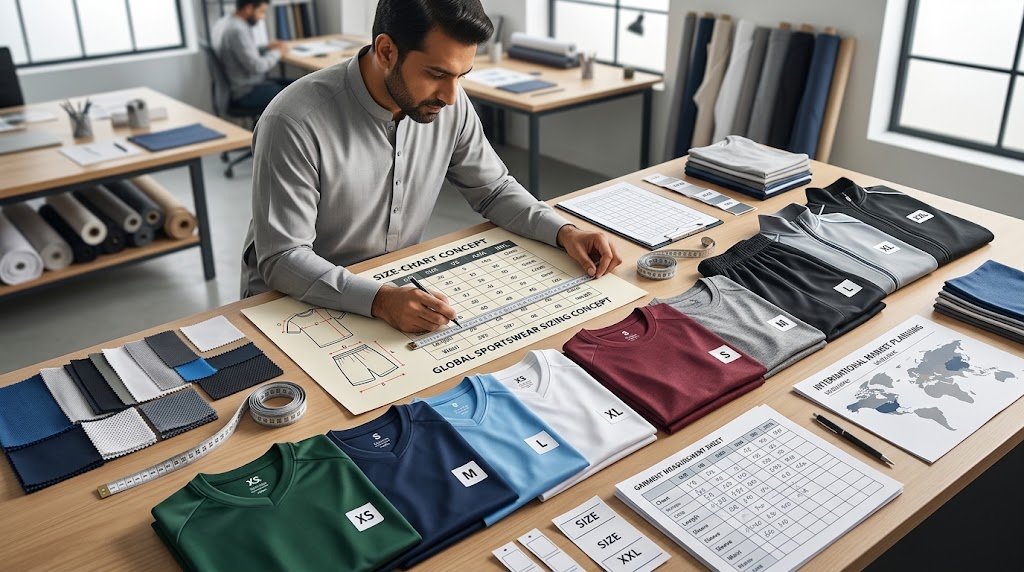
Quick Answer: How Do You Prevent Production Errors?
Production errors are prevented through documentation, sampling and verified approval. Write a complete tech pack. Approve fabric and trims before cutting. Produce a pre-production sample and fit-test it in multiple sizes. Confirm every specification in writing before bulk production begins. Inspect at defined checkpoints — not just at the end.
The brands with the lowest defect rates are not the ones with the best factories. They are the ones with the most disciplined pre-production process. They document everything, sample properly, test at the extremes of the size range and never give a verbal go-ahead.
Every error caught before bulk production costs a fraction of what it costs after. A colour mismatch caught at lab dip stage costs a conversation. The same mismatch caught after 500 garments are cut and sewn costs the entire run.
The pre-production stage is not a formality. It is the only stage where you can still change anything without losing money.
Where Production Errors Actually Come From
Before you can prevent errors, it helps to know where they originate. In apparel manufacturing, most bulk production defects trace back to one of these six sources.
The Six Root Causes of Bulk Production Errors
1. Incomplete Tech Pack
Missing measurements, unclear seam types or no fabric specification. The factory fills the gaps with assumptions.
2. Skipped or Rushed Sampling
No pre-production sample, or a sample that was approved without testing it in real conditions.
3. Fabric and Trim Mismatch
The bulk fabric or trim differs from the approved sample in shade, weight or stretch recovery.
4. Grading Errors
The garment fits at the sample size but fails at the smallest or largest sizes in the range.
5. Decoration Placement Errors
Print, embroidery or patch placement sits differently from the approved sample.
6. Communication Gaps
Verbal agreements, no written confirmation, or changes made without updating the spec sheet.
Notice that none of these are primarily factory failures. They are pre-production failures. The factory can only execute what it has been given. If the tech pack is vague, the sample is rushed or the fabric is not approved, the bulk order inherits those problems.
The Tech Pack: Your First Line of Defence
A tech pack is the document that tells the factory exactly what to make. If it is incomplete, the factory will make assumptions — and those assumptions are where errors begin. A complete tech pack removes ambiguity.
What a complete tech pack should include
- Technical flats — front, back and side drawings with seam lines, panel breaks and construction details.
- Measurement chart — point-by-point measurements for the base size, with grading rules stated.
- Fabric specification — fibre composition, GSM, knit type, stretch direction, recovery percentage and finish.
- Trim specification — thread type and colour, elastic, zippers, drawcords, labels and packaging.
- Colour references — Pantone numbers for fabric and trims, plus lab dip requirements.
- Decoration specification — print method, placement, dimensions, colour references and artwork files.
- Construction notes — stitch types, seam allowances, bartacks, topstitching and finishing details.
- Labels and packaging — woven labels, care labels, size tags, hangtags and polybag specifications.
A tech pack should be clear enough that a factory that has never worked with you before can produce an accurate sample from it. If your tech pack requires a phone call to explain, it is not complete.
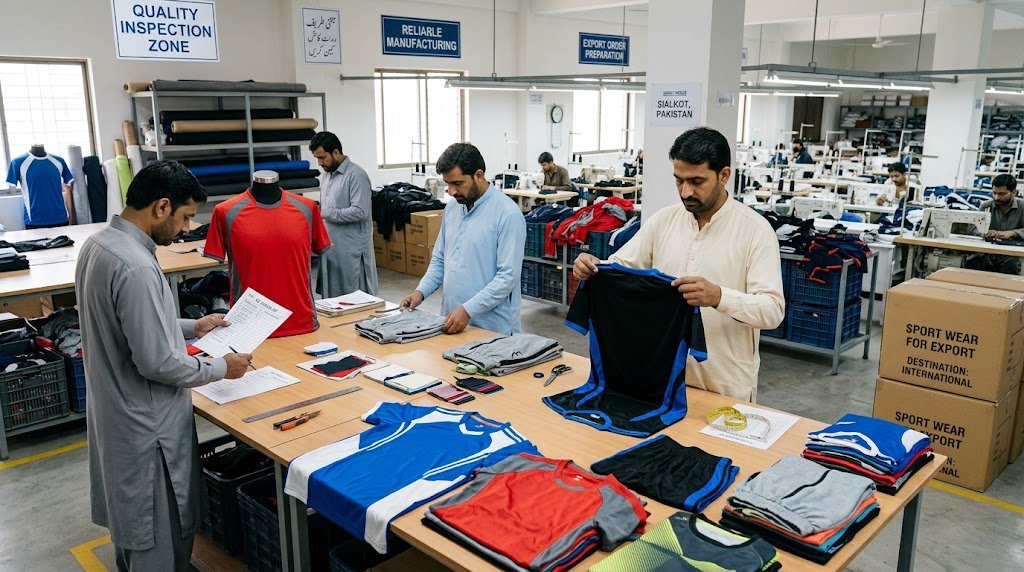
Fabric and Trim Approval: Lock the Inputs Before Cutting
Once fabric is cut, it cannot be changed. The single most effective way to prevent bulk errors is to approve every input — fabric, trims and thread — before cutting begins.
Lab dip approval
A lab dip is a small fabric swatch dyed to your specified colour. Approve the lab dip in writing before bulk dyeing. A shade that looks slightly different on a screen or under office lighting can be unacceptable under natural light or against a reference standard. Always approve under the lighting conditions your customer will experience.
Bulk fabric approval
Once bulk fabric is produced, request a bulk swatch and compare it against the approved lab dip. Check shade, GSM, hand feel and stretch recovery. If the bulk fabric differs from the approved standard, this is the last moment to catch it before cutting. Fabric that fails at this stage costs a delay. Fabric that fails after cutting costs the entire order.
Trim and thread approval
Approve thread colour against the fabric, not against a colour chart. Approve elastics for width, tension and recovery. Approve zippers, drawcords, labels and packaging components before bulk production. Every trim is a potential mismatch point.
| Approval Item | When to Approve | What to Check |
|---|---|---|
| Lab dip | Before bulk dyeing | Shade under natural and retail lighting; against reference standard |
| Bulk fabric | Before cutting | Shade, GSM, hand feel, stretch recovery, opacity |
| Thread | Before sewing | Colour against fabric, not chart; strength and stretch compatibility |
| Elastic and trims | Before sewing | Width, tension, recovery, colour, durability |
| Labels and tags | Before finishing | Text accuracy, size, placement, care instructions |
| Decoration artwork | Before production | Placement, dimensions, colour match, print method suitability |
Sampling: The Most Important Error-Prevention Step
The pre-production sample is where you catch errors while they are still cheap to fix. It is the closest thing to the bulk product that exists before bulk production begins. Treat it as your last opportunity to change anything.
Sample the right sizes
Do not approve a bulk order based on a single sample size. Order pre-production samples in at least three sizes — the smallest, the middle and the largest in your range. A garment that fits well in Medium can fail badly at Small and XL. This is especially important if you offer extended or youth sizing.
Wear-test the sample
Do not simply measure the sample. Wear it. Move in it. Run, stretch, squat, jump. Wash it according to the care label. Check the fabric recovery, the seam integrity, the print durability and the fit after washing. A sample that looks correct on a hanger can fail in real use.
Approve in writing
Once you approve a sample, confirm the approval in writing and retain the approved sample as your golden reference. This sample becomes the standard against which bulk production is checked. If a dispute arises during bulk production, the golden sample is the reference that settles it.
Fit Testing Across the Size Range
Fit testing is not the same as sampling. Sampling confirms the garment matches the tech pack. Fit testing confirms the garment works on real bodies across the full size range.
Test at the extremes
The middle sizes almost always fit acceptably. Problems appear at the smallest and largest sizes. If your grading rules are wrong, a size Small may fit while a size XL gaps at the neckline or pulls across the chest. Always test the smallest and largest sizes in your range before approving bulk production.
Test extended sizes separately
If you offer extended sizing, do not assume that scaling up a standard pattern works. Extended sizes often need different grading rules, adjusted construction and separate fit testing. The same applies to youth sizing, which has different body proportions from adult sizing. The guide on choosing sportswear sizes for global customers covers how to approach fit blocks and grading for different markets.
Test on real bodies
A fit model is useful, but a fit model represents one body type. Where possible, test on multiple people across the size range. For performance apparel, test through the actual activity the garment is designed for — running, training, stretching — not just standing still.
QC Checkpoints: Catch Errors at the Cheapest Stage
A defect caught at cutting costs almost nothing to fix. The same defect caught at packing costs a full garment. This is why reliable manufacturers inspect at multiple stages — not just at the end.
Where Quality Should Be Checked in Production
Incoming Fabric
Check GSM, shade, stretch and defects against the approved standard before cutting.
After Cutting
Verify panel dimensions against the pattern and check for shade variation between panels.
During Sewing (In-Line)
Check stitch density, seam alignment, tension and construction during production, not after.
After Decoration
Verify print placement, embroidery registration, colour accuracy and decoration durability.
Finishing
Check thread trims, label placement, measurement points and overall appearance.
Pre-Shipment
Final AQL inspection on a defined sample size before packing and sealing.
Documentation and Written Approval: The Discipline That Prevents Drift
Verbal agreements are the most common source of disputes in apparel manufacturing. "We agreed on 220 GSM" means nothing if the email says 200 GSM. The discipline of written confirmation prevents almost every ambiguity that leads to a bulk error.
Confirm every decision in writing
After every call, meeting or sample review, send a written summary of what was agreed. If the manufacturer does not confirm it, the agreement does not exist. This applies to fabric specifications, measurements, decoration placement, packaging, lead times and pricing.
Version-control your specifications
When a specification changes, update the tech pack and confirm the new version in writing. Do not allow a change to be communicated only verbally, because the factory may still be working from the previous version. A spec change that is not documented is a spec change that will be missed.
Keep a specification file for every style
Maintain a written record of every approved specification: fabric reference, GSM, colour codes, size chart, decoration placement, thread colours, trims and packaging. This record serves two purposes — it prevents errors during bulk production, and it makes future reorders reproducible without a new sampling round.
Common Mistakes That Cause Bulk Production Errors
- Approving a sample without testing it. A sample that looks correct on a hanger can fail in movement, washing or after repeated wear.
- Testing only the middle size. Grading errors appear at the extremes, not in the middle of the size range.
- Skipping fabric approval. The bulk fabric may differ from the sample fabric in shade, GSM or stretch recovery.
- Relying on verbal agreements. If it is not in writing, it is not agreed — and it will not be remembered.
- Approving decoration without a physical check. Print placement, colour and size should be verified on an actual garment, not on a digital mockup.
- Not retaining a golden sample. Without a signed-off reference, reorders drift and disputes cannot be resolved.
- Changing specifications after sampling. A change made after sample approval must be re-sampled and re-approved, or it will not be executed correctly.
- Rushing the pre-production stage. Time saved in sampling is usually paid back with interest in bulk defects.
Practical Examples: Two Brands, Two Outcomes
A Brand That Skipped the Sampling Process
A new activewear brand places a bulk order for 500 leggings based on a stock fabric sample and a digital mockup. The manufacturer produces the order without a pre-production sample. The bulk leggings arrive with a waistband that sits lower than expected and a fabric that feels lighter than the sample swatch. The brand cannot sell them at full price, the reorder is delayed and the launch is pushed back by eight weeks. The cost of the error exceeded the cost of a single sample round by a factor of ten.
A Brand That Treated Sampling as an Investment
A teamwear brand developing a sublimated jersey range produces pre-production samples in three sizes — Small, Medium and XL — and wear-tests them through training sessions. The XL sample reveals that the shoulder seam pulls during overhead movement. The brand adjusts the grading rule for the larger sizes before bulk production. The bulk order arrives correct, the club reorders the following season and the brand avoids a return that would have cost several times more than the extra sample round.
How Habit Fit Sports Helps Reduce Production Errors
Habit Fit Sports manufactures custom sportswear from Sialkot, Pakistan, for activewear brands, gyms, schools and teams worldwide. The production process is structured around the same error-prevention principles covered in this guide: complete tech packs, fabric and trim approval, multi-size sampling, fit testing and defined QC checkpoints.
Product capabilities include custom sports bras, custom performance leggings and yoga pants, custom letterman jackets for schools and teams and custom BJJ gis for brands, gyms and teams. Brands building a full collection can source multiple product categories from one manufacturer, keeping specifications consistent across the range.
On the decoration side, the company provides direct-to-film (DTF) printing for detailed logos and branding, reflective tape manufacturing for visibility and design accents, and 3D embossing for textured fabric finishes.
If you are preparing for a bulk production run, you can review how the production process works, read the guide on cut-and-sew vs ready-made sportswear, or contact the Habit Fit Sports team to discuss your tech pack, sampling requirements and quality control expectations. The full range of services is listed on the Habit Fit Sports homepage.
Frequently Asked Questions About Reducing Production Errors
What is the most common cause of bulk production errors?
Incomplete or unclear specifications. When the tech pack is vague, the factory fills the gaps with assumptions — and those assumptions are where errors begin. A complete tech pack with clear measurements, fabric specs, trim specs and decoration placement prevents the majority of bulk errors.
How many sample sizes should I test before bulk production?
At minimum, test the smallest, middle and largest sizes in your range. If you offer extended or youth sizing, test those separately with their own fit block. A garment that fits well in Medium can fail badly at Small and XL.
Should I approve fabric before or after cutting?
Always before cutting. Once fabric is cut, it cannot be changed. Approve the lab dip before bulk dyeing, and approve the bulk fabric swatch — checking shade, GSM, hand feel and stretch recovery — before cutting begins.
What is a golden sample and why does it matter?
A golden sample is the signed-off pre-production sample that serves as the reference for bulk production and all future reorders. If a dispute arises during production or on reorder, the golden sample settles it. Without one, specifications drift and consistency is lost.
How do I confirm specifications with my manufacturer?
In writing, every time. After every call, meeting or sample review, send a written summary of what was agreed and ask the manufacturer to confirm it. If it is not in writing, it is not agreed. Version-control your tech pack so no one is working from an outdated specification.
What QC checkpoints should I expect in production?
A reliable manufacturer inspects at incoming fabric, after cutting, during sewing (in-line), after decoration, at finishing and before shipment. The final inspection should follow an AQL standard — commonly AQL 2.5 for major defects and AQL 4.0 for minor defects.
Can I change specifications after the sample is approved?
Yes, but the change must be documented and re-sampled. A specification change that is communicated only verbally will not be executed correctly, because the factory is still working from the approved sample. If it changes, re-sample and re-approve.
Is it worth paying for extra sample rounds?
Almost always yes. The cost of an extra sample round is a fraction of the cost of a failed bulk order. A defect caught at sample stage costs a revision. The same defect caught after 500 garments are produced costs the entire run.
What to Remember About Preventing Production Errors
Production errors are not random. They follow predictable patterns — incomplete specs, skipped sampling, unapproved fabric, untested grading and verbal agreements. Each of these is preventable with a disciplined pre-production process.
The practical checklist is straightforward. Write a complete tech pack. Approve fabric and trims before cutting. Produce pre-production samples in at least three sizes. Wear-test them through real activity. Approve in writing and retain a golden sample. Confirm every specification in writing. And inspect at defined checkpoints throughout production, not just at the end.
Habit Fit Sports builds error prevention into the production process — from tech pack review through to pre-shipment inspection — helping brands avoid the expensive mistakes that happen when the pre-production stage is rushed. If you are preparing for a bulk order, the best next step is a conversation about your specifications and quality expectations.
Ready to Run a Bulk Order Without the Errors?
Whether you are placing your first production run or refining your process after a difficult order, Habit Fit Sports can help you build a documented, repeatable pre-production workflow that catches problems early.
Discuss Your Production Plan See How Production WorksHave a specific product or quality requirement? Get in touch to discuss tech packs, sampling, fit testing and QC checkpoints.