Why Nike and Adidas Are Quietly Moving Their Manufacturing to Pakistan
April 28, 2026, 10:50 pm
The global sportswear industry is going through one of its biggest shifts in decades. Supply chains are being redrawn, and Pakistan, specifically Sialkot, is sitting right at the center of this transformation. If you are a brand, buyer, or importer looking for high-quality sportswear manufacturing, you need to understand what is happening right now.
The Fall of China: Why Brands Are Looking for Alternatives
Let’s talk tariffs. Because that is the word that is keeping sourcing managers up at night.
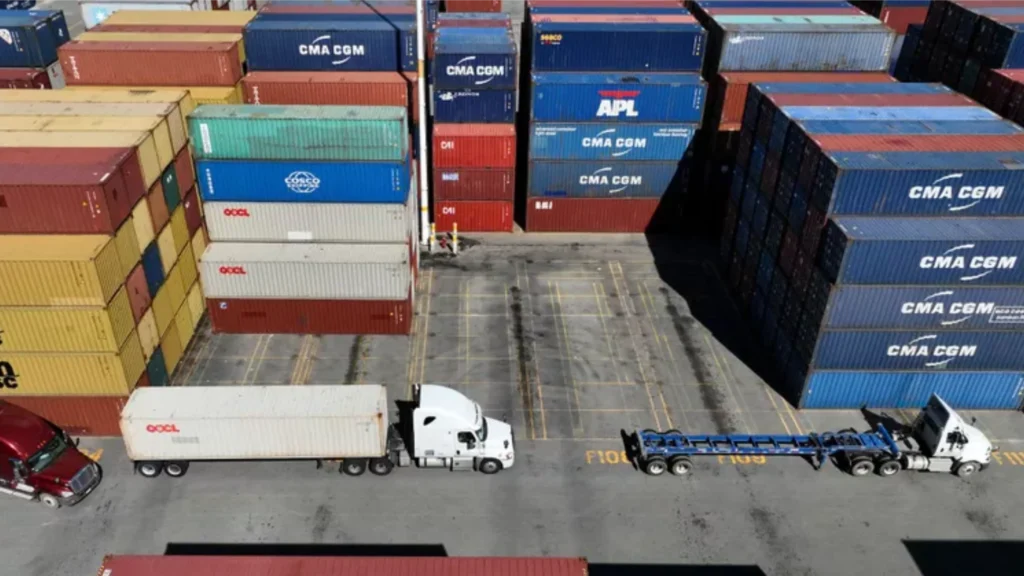
The United States imposed sweeping reciprocal tariffs on goods manufactured in China. The result? A dramatic spike in production costs for brands that built their supply chains around Chinese factories. For companies like Nike and Adidas, this is not a minor inconvenience; it is a structural crisis.
Nike has publicly stated it anticipates a $1 billion increase in production costs because of these tariff pressures, forcing the brand to reevaluate its entire procurement strategy. Vietnam, which had absorbed much of China’s share in Nike’s supply chain, now faces a tariff rate nearing 46%, compounding the problem further. Meanwhile, the Center for Strategic and International Studies (CSIS) projects that these tariffs could trigger a 7.1% increase in US consumer prices across affected categories.
Adidas told a similar story. During a 2024 earnings call, the CEO of Global Brands stated directly: “We have basically tried not to source any products anymore from China into the U.S.” The company had already been doing significant work on diversifying its supply chain, and the tariff climate only accelerated that move.
The conclusion is simple: brands that relied too heavily on China or Vietnam are scrambling to find alternatives that offer quality manufacturing, competitive pricing, and lower geopolitical risk. That search leads them to Pakistan.
Why Pakistan, especially Sialkot, is the Perfect Fit for Sportswear
Here is where things get interesting.
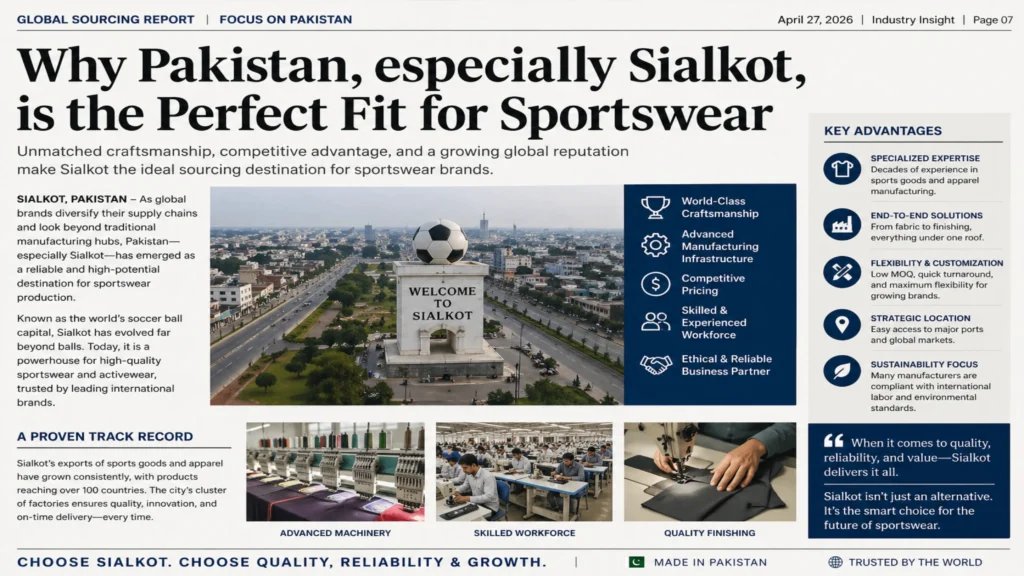
Sialkot is not a new name in global sportswear manufacturing. This city in Punjab, Pakistan, has been producing world-class sports goods since 1883. It supplies 70% of the world’s hand-stitched footballs, roughly 40 million units annually, to brands including FIFA, Adidas, Nike, and Puma. It produced the official match ball for the FIFA World Cup. More than once.
According to DHL Pakistan, the sports goods sector in Sialkot involves around 2,400 companies and exports approximately $450 million annually. The Punjab Government reports that over 200,000 people are directly employed in the sports goods sector across the city. These are not small operations; this is a fully developed industrial ecosystem.
Pakistan’s sports goods exports grew by 15.86% in the first five months of FY 2025-26, according to the Pakistan Bureau of Statistics. Export earnings reached $179.33 million between July and November 2025, compared to $154.79 million in the same period the previous year. That is not a spike; that is a steady, reliable upward trend.
According to Fortune Business Insights, the global sportswear industry is projected to grow from $193.89 billion in 2024 to $305.67 billion by 2030. Sialkot is already supplying 52 to 62 percent of sports apparel to global markets. The city is not trying to break into the game. It is already playing at the highest level.
What Nike and Adidas Actually Manufacture in Pakistan
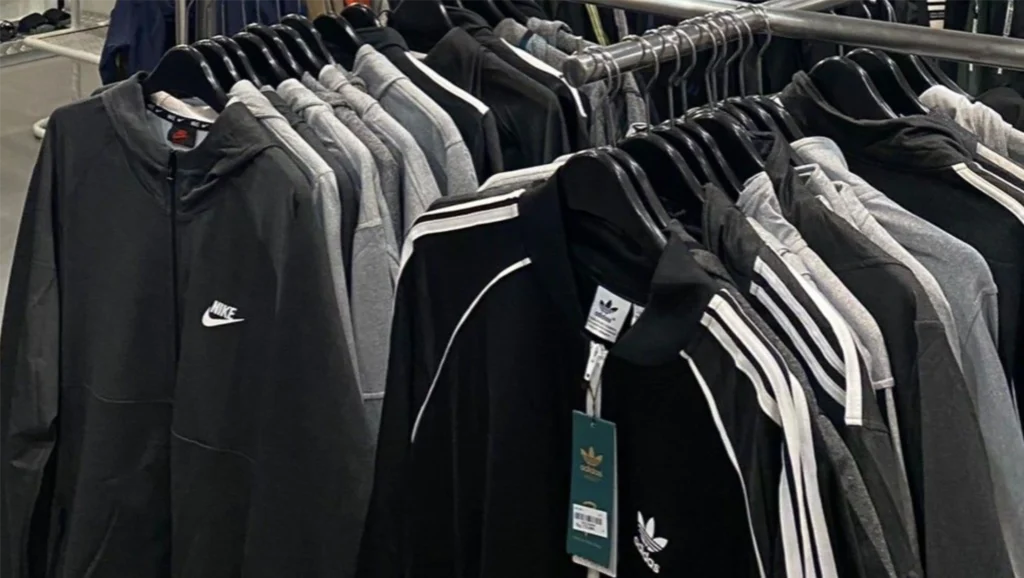
This is not speculation. Nike’s FY2024 10-K filing with the SEC confirms that Pakistan is part of its apparel manufacturing network. In fiscal 2024, Nike worked with 67 contract manufacturers operating 303 apparel factories across 34 countries. Pakistan was among them.
Adidas’s 2024 Global Factory List also confirms Pakistan as a sourcing destination, listed alongside other supplier countries including Indonesia, Cambodia, and India.
Pakistani factories produce a range of sportswear and performance apparel for global brands, including team uniforms, training gear, and athletic apparel. The manufacturing blend in Sialkot, skilled handcraft combined with modern equipment, makes it particularly well-suited for technical sportswear where seam quality and durability are non-negotiable.
One sourcing consultancy that works with brands transitioning from China noted: “All of our clients who have moved their apparel manufacturing from China to Pakistan in the last couple of years now swear by it.” That kind of word-of-mouth trust in the B2B world is hard to earn and even harder to fake.
Why Pakistani Factories Are Winning the Seam Quality Battle Against Chinese Manufacturers
This deserves a real conversation, not just marketing language.
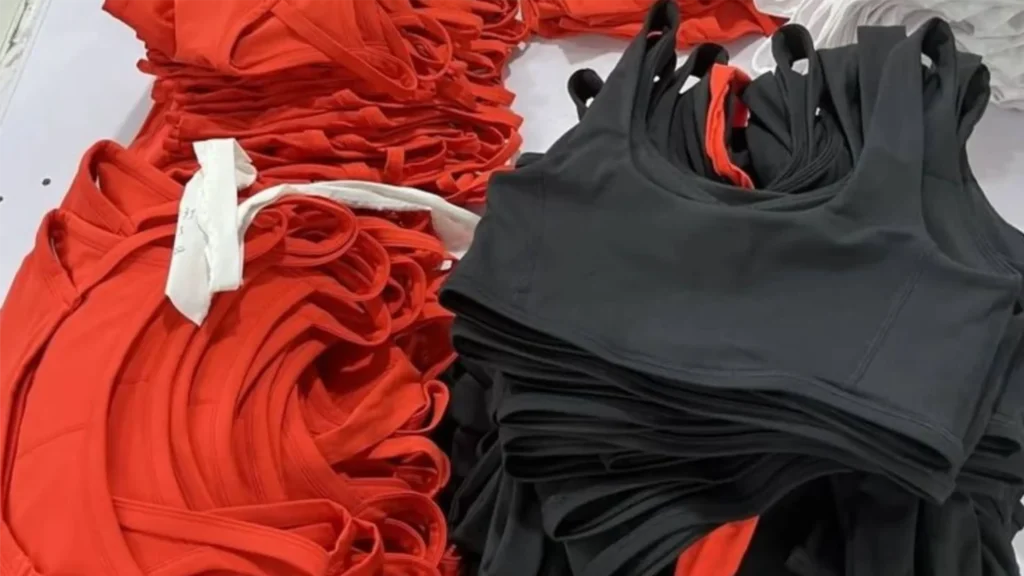
Sialkot’s manufacturing culture is built on precision handcraft. The same hands that stitch footballs for FIFA World Cups with every single panel placed correctly under pressure, bring that same discipline to sportswear production. The city’s artisans have decades of accumulated expertise in high-tolerance stitching, something that factory automation in China often struggles to replicate at the same quality level.
Pakistani manufacturers use advanced fabric technologies, including high-performance polyester, spandex, and moisture-wicking blends imported to meet international standards. Flatlock stitching, the gold standard for performance sportswear, is a common technique across Sialkot’s facilities.
The SMEDA cluster profile for Sialkot notes that the city’s manufacturing model skillfully blends traditional craftsmanship with modern technology, producing products that stand out in the global market. That is not just a competitive edge. That is a long-term structural advantage.
Top 5 Trending Products Big Brands Are Sourcing from Pakistan
Global brands, including Adidas, Nike, Under Armour, and UFC-affiliated gear companies, are sourcing the following product categories from Pakistani manufacturers at scale.
1. Rashguards
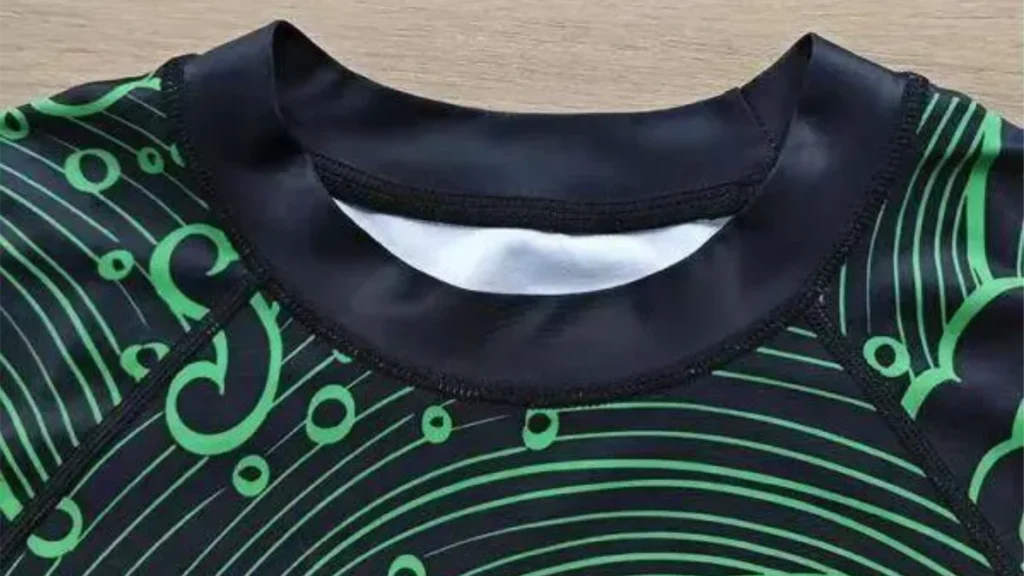
Rashguards are compression tops made from polyester-spandex blends, typically with an 85/15 or 80/20 ratio, designed to wick moisture, prevent skin irritation, and provide muscle support. They are used across Brazilian jiu-jitsu (both gi and no-gi), MMA, surfing, swimming, and general gym training. Flatlock stitching is critical in this product to prevent chafing during close-contact sports. Sialkot manufacturers produce both short-sleeve and long-sleeve variants with sublimated graphics that do not crack or peel over time. For brands sourcing UFC or IBJJF-legal gear, Pakistani factories offer full customization with anti-slip waistbands and antibacterial fabric treatments.
2. Tank Tops
Performance tank tops are a staple in gym wear, running, CrossFit, and basketball training. The best fabric options include 100% polyester for maximum moisture-wicking, or a polyester-cotton blend for a softer feel. Pakistani manufacturers offer cut-and-sew customization, screen printing, sublimation, and embroidery all under one roof. Lightweight, breathable construction makes these a go-to for both training and athleisure markets in the USA, EU, and Australia.
3. Leggings / Compression Tights
Compression leggings are used in yoga, running, cycling, CrossFit, and grappling sports. The preferred fabric is a 4-way stretch polyester-spandex blend with moisture-wicking and quick-dry properties. High-waist designs with flat seams are in high demand. Sialkot factories produce these with consistent sizing accuracy, which is critical for brands shipping to the US and EU markets with strict size chart expectations. Compression spats, full-length leggings used in BJJ, are also a fast-growing export product from Sialkot.
4. Sports Bras
High-impact sports bras for running, HIIT, and combat sports require breathable nylon or spandex construction, seamless or flatlock finishing, and proper underwire-free support. Pakistani manufacturers produce racerback, cross-back, and longline designs with removable padding, catering to women’s fitness wear buyers across all major markets. The IBJJF and UFC communities have driven demand for sports bras paired with rashguard sets, which Sialkot factories now offer as coordinated collections.
5. BJJ Gi
The Brazilian jiu-jitsu gi is one of the most technically demanding garments in martial arts. The jacket requires heavy-duty cotton canvas or pearl weave fabric (typically 350–550 GSM), while the pants use a ripstop cotton blend for flexibility and durability. Pakistan has a long history of producing martial arts uniforms. Sialkot exporters like Marts Industries have been producing GIS since 1995. The gi is used in Brazilian jiu-jitsu competition and training, judo, and some submission wrestling events. Brands sourcing IBJJF-approved gis from Sialkot benefit from experienced stitching teams who understand the specific reinforcement requirements at stress points like collars, armpits, and knee panels.
FAQs
Yes. Nike's FY2024 10-K SEC filing confirms Pakistan as part of its apparel manufacturing network. Nike works with contract manufacturers across 34 countries for apparel production, and Pakistan is among them.
US reciprocal tariffs on Chinese goods have significantly increased production costs. Nike alone projects a $1 billion cost increase. Adidas has publicly stated it is actively reducing US-bound sourcing from China. Brands are diversifying into countries with lower tariff exposure, and Pakistan is a key beneficiary.
Sialkot is best known for producing 70% of the world's hand-stitched footballs, but its manufacturing base is far broader. The city produces rashguards, leggings, sports bras, BJJ gis, boxing gear, MMA gloves, team uniforms, and activewear at scale, exported to the USA, EU, and Australia.
Pakistani manufacturers work with polyester, spandex, nylon, cotton canvas, pearl weave, and ripstop cotton. Performance blends for moisture-wicking, compression, and anti-odor properties are standard across Sialkot's factories, using both locally sourced and imported specialty fabrics.
Yes. Most manufacturers in Sialkot are small and medium-scale enterprises that accommodate flexible minimum order quantities. Many offer sampling, custom branding, sublimation printing, and OEM manufacturing, making them accessible to brands at various stages of growth, from startups to established labels expanding their product lines.