

Custom Sports Bras for Activewear Brands: A Complete Manufacturing Guide
A sports bra is the most technically demanding garment in activewear. It has to support, stretch, recover and stay comfortable through movement — all while carrying your brand. This guide breaks down fabric selection, support levels, cup construction, sizing and manufacturing for activewear brands developing custom sports bras.
If you run an activewear brand, you already know the stakes. A customer who finds a sports bra she loves becomes fiercely loyal. She buys multiples, recommends it to friends, and follows your brand across seasons. But a sports bra that digs into the shoulders, loses its shape after three washes, or provides no real support generates returns, complaints and negative reviews that stick around for years.
Unlike leggings or training tops, sports bras combine multiple performance requirements in a single garment. They must control movement, maintain shape under stress and fit a range of body types. Unlike a T-shirt, there is very little room for error. If the fabric does not recover, the bra sags. If the underband tension is wrong, it rolls or digs. If the cup system is poorly specified, the product looks cheap on the shelf.
This article is written for brand owners, product developers and sourcing managers who are ordering custom sports bras. It covers fabric options, support levels, cup construction, sizing and manufacturing considerations. It also looks at how activewear brands use custom sports bras commercially — and where Habit Fit Sports fits into that process.
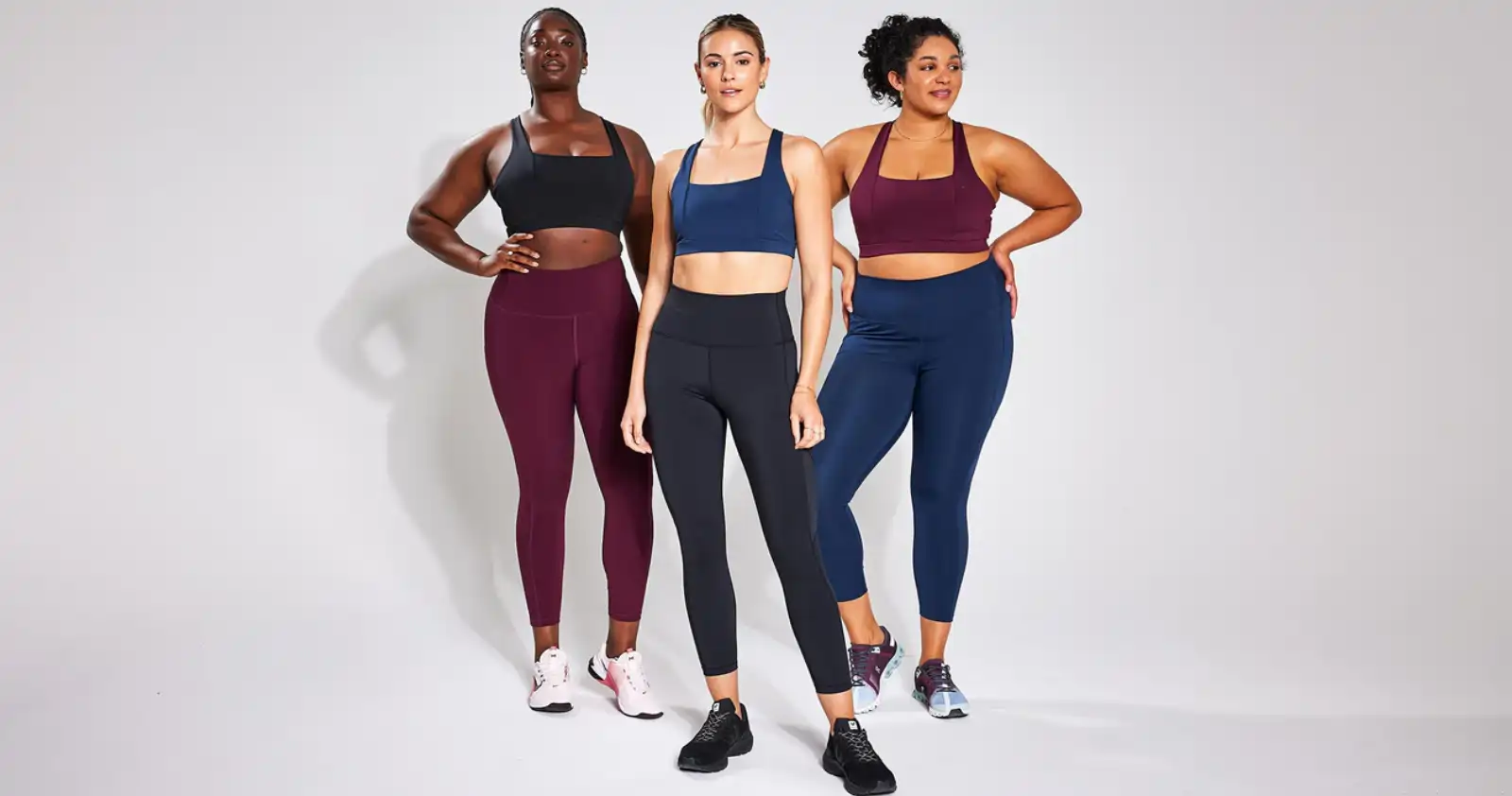
Quick Answer: What Makes a Good Custom Sports Bra?
A custom sports bra should be built from a nylon-spandex or polyester-spandex blend with strong stretch recovery. For the main body, target 180–220 GSM, though the exact weight depends on the support level you are targeting. The fabric must manage moisture, maintain opacity and hold its shape under repeated stress and washing.
The support level shapes every other decision. Low-impact bras rely on compression from the fabric. Medium-impact bras add a structured underband and stable straps. High-impact bras require encapsulation cups, wider straps and a significantly stronger underband to control movement during running and HIIT.
For brands, the three decisions that matter most are support level, fabric composition and cup system. Get those right, and the bra will perform. Get them wrong, and no amount of design work will fix the product.
What Is a Sports Bra and Who Needs One?
A sports bra is a performance garment engineered to minimise breast movement during physical activity. Unlike a fashion bra, which prioritises appearance, a sports bra is designed around compression, encapsulation, moisture management and durability.
A custom sports bra goes further. Instead of buying a stock product and adding a label, the bra is manufactured around your specifications — your fabric, your support level, your strap design, your cup system, your branding.
Who typically orders custom sports bras?
- Activewear brands building a sports bra line for retail or direct-to-consumer sales.
- Private-label businesses that want bras carrying their own brand and nothing else.
- Fitness studios and gyms that want branded bras for members or instructors.
- Sports teams and dance studios ordering matching performance tops.
- Retailers and distributors looking for a private-label sports bra they can sell under their own name.
- Startups launching a first activewear collection with low minimum order quantities.
The requirements differ from buyer to buyer, but the core question is always the same: how do you get a sports bra that supports properly, fits well and represents your brand?
The Main Components of a Sports Bra
Main Fabric
Nylon-spandex or polyester-spandex with strong stretch recovery. Typically 180–220 GSM for the body.
Underband
Elastic band that anchors the bra to the ribcage. Tension, width and structure determine support and comfort.
Straps
Width and adjustability affect pressure distribution. Wider, plush-backed straps reduce digging.
Cup System
Removable pads, molded cups or bonded cups. Determines shape, coverage and wash behaviour.
Seams
Flatlock for low-profile comfort. Coverstitch for hem and band finishing. Panel design affects shaping.
Lining & Labels
Moisture-wicking lining. Woven neck labels, size tags and care labels carry your brand identity.

Support Levels: The First Decision You Make
Before you think about fabric or design, you need to decide what support level you are targeting. This single decision shapes almost every other manufacturing choice — from the fabric weight to the underband structure to the cup system.
Low-impact support
Designed for yoga, Pilates, stretching and walking. These bras rely primarily on compression from the fabric rather than internal structure. Construction is relatively simple — a wide underband, wide straps or a racerback design, and no underwire or molded cups. The fabric does the work. These are the easiest and least expensive to manufacture.
Medium-impact support
Designed for cycling, strength training, hiking and moderate cardio. These typically incorporate a wider underband with more rigid structure, often with a fold-over or separate sewn band with elastic. Straps are usually adjustable. Some styles include removable pads for light shaping. Medium-impact bras represent the sweet spot for most fitness brands — they work for a wide range of activities and are not prohibitively complex to produce.
High-impact support
Designed for running, HIIT and high-movement activities. These require engineering-level design — encapsulation cups, underwire in some designs, internal boning or rigid elements, and significantly more complex construction. If you are targeting runners or high-intensity athletes, this is your category. Manufacturing cost and complexity is substantially higher.
Fabric Selection for Custom Sports Bras
Sports bras need fabric that does several things simultaneously: stretch and recover, manage moisture, maintain opacity and hold its shape under repeated stress and washing. The main options are:
Nylon-spandex (78% nylon, 22% spandex)
The premium choice. Soft, durable, resists pilling and maintains colour well. Chlorine-resistant for brands targeting swimmers or pool-based training. More expensive than polyester equivalents but delivers a premium hand feel. Target 200 to 220 GSM for the main body.
Polyester-spandex (88% polyester, 12% spandex)
More affordable, excellent moisture management and takes sublimation printing well. A solid choice for mid-tier price points. The same GSM range applies. Polyester is more durable in some respects but has a slightly firmer hand feel than nylon.
Power mesh or perforated panels
Often used in combination with the main fabric for ventilation zones. Typically lighter, around 140–160 GSM, and placed at the back or under the arms where breathability matters most.
| Support Level | Recommended GSM | Spandex % | Best Suited For |
|---|---|---|---|
| Low impact | 160–200 GSM | 8–15% | Yoga, Pilates, walking. Lighter, breathable fabric for comfort. |
| Medium impact | 200–240 GSM | 15–20% | Gym training, cycling, hiking. Balanced compression and structure. |
| High impact | 240–300 GSM | 20–25% | Running, HIIT, cross-training. Strong recovery and compression. |
Cup Systems: Removable Pads, Molded Cups or Bonded Cups
Two sports bras can share the same fabric, the same strap design and the same price tag — and feel like completely different products the moment they are picked up. The difference is usually the cup. It is also the component buyers specify last and complain about first: pads that twist in the wash, cups that crease in shipping, "premium" styles that read cheap on the shelf.
Removable pads
Foam pads inserted into an internal pocket. This is the default option for a reason: no tooling required, lowest cost, and the customer decides coverage. The entire quality difference lives in two details — pad quality (perforated, breathable foam that survives washing) and pocket engineering (opening placement and stitch-down points that stop the pad rotating in the machine). "Pads twisted after one wash" is a pocket-design failure, not fate. Best for yoga, entry-level lines and multi-use styles.
Molded cups (sewn-in)
Heat-molded foam shaped permanently and sewn into the bra. This buys you a consistent retail silhouette and a step up in perceived value. The commitment: molds are per size and shape, so your size range multiplies your tooling, and mold decisions lock earlier than fabric decisions. A cup that flatters size M and gapes at XL is the classic molded-cup failure. Best for studio-to-street and mid-tier lines.
Bonded / laminated cups
Cup layers laminated to the shell with minimal stitching. This removes seams and stitch lines for the cleanest look and the most stable wash behaviour — at the highest cost, with lamination quality as the new risk to manage. Delamination at the edge is the failure mode; edge engineering is the answer. For a premium minimal line, it is often the difference customers can feel but cannot name.
Sizing: Getting the Fit Right Across the Range
Sports bra sizing is not the same as regular clothing sizing. Most activewear brands use a simplified system — XS, S, M, L, XL, XXL — based on bust and underbust measurements. This is easier to stock and sell than traditional bra sizing (32B, 34C, etc.), but it comes with trade-offs.
A simplified size system cannot accommodate every body shape. Two customers who both measure a "medium" bust may need different cup coverage or underband tension. This is why fit testing across the full size range matters more than testing a single sample size.
Before production begins, confirm three things with your manufacturer:
- Who owns the size chart. Are you working from a standard block, or are you supplying measurements for a custom fit?
- How grading works. Grading is the process of scaling a pattern up and down across sizes. Poor grading is why some bras fit well in size S and badly in size XL.
- Whether extended sizing is available. Some manufacturers offer plus-size patterns for brands targeting a broader audience. A standard pattern scaled up does not always fit well.
If you are also producing custom performance leggings, keeping the size grading logic consistent between the two products makes it easier for customers to buy a matching set in the same size.
Printing and Decoration Options
Customisation is where a sports bra stops being a commodity and becomes a brand product. The method you choose depends on the design, the fabric and where the branding sits.
Sublimation printing
Sublimation is the most common method for all-over printed sports bras. The ink is printed onto transfer paper and heated until it turns into gas, bonding with the polyester fibres in the fabric. The result is a print that does not crack, peel or fade because the colour is part of the fabric itself. Sublimation works best on light-coloured or white polyester bases.
If your brand also produces other printed apparel, direct-to-film (DTF) printing is a useful method for detailed, full-colour designs on a wider range of fabrics. For sports bras, DTF can be used for smaller logos and branding elements where sublimation is not practical.
Screen printing
Screen printing applies ink to the surface of the fabric. On high-compression sports bras, standard plastisol screen print is not recommended because it is rigid and cracks when the fabric stretches. Water-based screen print is more flexible and breathable, making it a better option for performance apparel. For small logos or single-colour marks, screen printing can work if the ink is specified for stretch fabrics.
Reflective and specialty details
Reflective tape and trim are increasingly used on running sports bras for visibility and design impact. Reflective tape manufacturing can be applied as seams, side stripes or accent panels. The tape needs to stretch with the fabric, so specify a stretch-compatible reflective material.
For a sculpted or textured look, 3D embossing can be used to create raised patterns on the fabric surface. This is a premium detailing option that works well on solid-colour bras where the texture becomes the design feature.
Labels and finishing touches
Woven neck labels, size tags and care labels are part of the finished product. For private-label brands, these are often specified alongside the print design. Heat-transfer logos on the underband are another common branding method for sports bras.
What to Look for in a Sports Bra Manufacturer
Design support and tech packs
A tech pack is a document that describes your sports bra in production terms: measurements, fabric composition, GSM, stretch direction, seam types, underband tension, strap geometry, cup system, print method and packaging. If you have one, a good manufacturer should be able to work from it directly. If you do not, ask whether they can help you develop one.
Fabric selection and testing
Ask what fabric options are available and how they perform in real training conditions. A manufacturer who can only offer one blend may not be able to serve your market. Look for a partner who can advise on spandex percentage, GSM, knit structure and the difference between nylon-spandex and polyester-spandex. Request stretch recovery test data and opacity test results for the specific fabric.
Underband and strap development
The underband and straps are where most sports bras fail. Ask how the underband is constructed — is it a simple elastic binding, a fold-over band, or a separate sewn band with elastic? Confirm the band height, tension and elastic specification. Wider, plush-backed straps distribute pressure better than thin elastic straps, especially for larger cup sizes. Ask to see samples of the strap and band construction on different sizes.
Cup system production
Confirm whether the manufacturer handles removable pads, molded cups, bonded cups or a combination. Removable-pad styles are the simplest and most cost-effective to produce. Molded and bonded cup programmes require tooling and process setup, which puts them in full-custom territory. If you are considering molded cups, ask how many sizes require molds and factor the tooling cost into your pricing.
Sampling and quality control
Always request a pre-production sample. The sample lets you check fabric feel, support level, strap comfort, underband stability, cup placement and print quality. Wear the sample for a full workout — run, jump, stretch. Check the underband after exercise to see if it has rolled or loosened. A manufacturer who is reluctant to provide a sample may not be the right partner.
Production quantities and private label
Minimum order quantities vary between manufacturers and are often calculated per design, per colourway or per fabric. Removable-pad styles typically run at lower MOQs, while molded and bonded programmes require higher volumes per style per colour. Clarify this before you plan your product line. If you are building a brand, confirm what private-label options are included — woven neck labels, size tags, care labels, hangtags and packaging are usually separate line items.
Common Mistakes When Ordering Custom Sports Bras
- Ignoring support level. Different activities require different structures. A yoga bra will not work for running, and vice versa.
- Choosing fabric by feel alone. Soft does not mean supportive. A fabric that feels lovely in the hand may not have the recovery needed for high-impact support.
- Poor strap design. Thin, non-adjustable straps lead to instability and shoulder discomfort. Wider, plush-backed straps distribute pressure better.
- Skipping fit testing. A bra that "looks good" on a mannequin can still fail in wear. Always test the sample through movement and washing before bulk production.
- Not testing the cup system. Removable pads that twist in the wash, molded cups that gape at larger sizes, bonded cups that delaminate — all are preventable with proper sampling.
- Forgetting labels and packaging. Woven labels, size tags, care labels and branded bags are part of the product experience. Specify them upfront.
Practical Examples: How Different Brands Use Custom Sports Bras
A Startup Activewear Brand Launching Its First Sports Bra
Two founders want to launch a yoga and gym activewear brand. They have a clear aesthetic and a small budget for their first run. Their priorities are low minimum order quantities, a medium-impact bra that works for multiple activities, and a simple removable-pad system. They choose a nylon-spandex blend at 220 GSM with a wide underband and a racerback design. They order a sample, test it through yoga and gym sessions, then place a small production run to validate the market before scaling.
A Running Brand Developing a High-Impact Sports Bra
An established running brand wants to add a high-impact sports bra to its collection. They need encapsulation cups for separation and support, a wide underband with strong elastic, and adjustable plush-backed straps. They work with a manufacturer who can advise on fabric weight — targeting 260–280 GSM — and test the bra through running and HIIT sessions. The sample is worn by testers across the size range before production begins.
A Private-Label Brand Expanding Into Matching Sets
A private-label brand already sells leggings and wants to add a matching sports bra. They need a medium-impact bra that uses the same fabric blend and colour palette as their leggings, with a bonded cup system for a premium minimal look. They work with a manufacturer who can match the fabric, maintain consistent sizing across the two products, and produce a coordinated set that customers can buy together.
Where Habit Fit Sports Fits Into Your Sports Bra Production
Habit Fit Sports works with activewear brands, private-label businesses, gyms and teams looking for custom sportswear solutions. The company manufactures custom sports bras in Sialkot, Pakistan, using four-way stretch nylon-spandex and polyester-spandex fabrics. The process covers design support, fabric selection, support level specification, cup system development, printing, sizing, sampling and private-label branding.
For brands that also produce leggings, Habit Fit Sports manufactures custom performance leggings and yoga pants and has published a detailed guide on manufacturing custom performance leggings for activewear brands. This means a brand can source a matching sports bra and leggings set from one supplier instead of managing separate manufacturing relationships.
On the decoration side, the company provides direct-to-film (DTF) printing for detailed logos and branding, reflective tape manufacturing for visibility and design accents, and 3D embossing for textured fabric finishes.
If you are planning a sports bra order, you can review how the production process works or contact the Habit Fit Sports team to discuss your fabric requirements, support level and branding needs. You can also see the full range of sportswear manufacturing services on the Habit Fit Sports homepage.
Frequently Asked Questions About Custom Sports Bras
What is the best fabric for custom sports bras?
Nylon-spandex is the premium choice because of its soft hand feel, durability and excellent stretch recovery. Polyester-spandex is more affordable, dries faster and takes sublimation printing well. The right blend depends on your target support level, price point and whether you want a premium or performance-focused feel. For the main body, target 180–220 GSM for low to medium impact and 240–300 GSM for high impact.
What GSM should a sports bra fabric be?
For low-impact bras, 160–200 GSM is typical. For medium impact, 200–240 GSM provides a good balance of structure and breathability. For high impact, 240–300 GSM delivers the compression and support needed. However, GSM alone does not determine support — the knit structure, spandex percentage and underband construction matter just as much.
Why do removable pads twist in the wash?
Pads twist because the internal pocket is too large or lacks stitch-down points that keep the pad in place. This is a pattern design issue, not a pad quality issue. When specifying removable-pad styles, ask to see the pocket specification — the opening placement and stitch-down points should stop the pad rotating during washing.
What is the difference between compression and encapsulation sports bras?
Compression bras press the chest firmly against the body to restrict movement. They are effective for low-to-medium impact activities like yoga, Pilates and weight training. Encapsulation bras feature individual structured cups that surround and support each side separately, much like a traditional bra. This construction is essential for high-impact sports bras designed for running and HIIT.
What printing method works best for sports bras?
Sublimation is the standard for all-over printed sports bras because the ink bonds into the polyester fibres and moves with the stretch without cracking or peeling. For logos and smaller branding elements, DTF or stretch-compatible heat transfers work well. Standard plastisol screen print is not recommended on high-compression sports bras because it is rigid and cracks when the fabric stretches.
What is the difference between private label and OEM sports bra manufacturing?
In private-label production, the manufacturer uses an existing bra pattern and you apply your branding, labels and packaging to it. It is faster and often more cost-effective. In OEM production, the bra is built to your specifications, which can include a custom pattern, specific fabric blend, underband construction and cup system. OEM gives more control but requires more input from you.
How do I test a sports bra sample before bulk production?
Wear the sample for a full workout. Run, jump, stretch and move through the activities your target customer will do. Check the underband after exercise — has it rolled, loosened or dug in? Check the straps for pressure points. Wash the sample according to the care label and check the cup system, elastic recovery and print quality. If any issue appears in the sample, it will appear in bulk production too.
What to Remember About Custom Sports Bras
A custom sports bra is a technical product before it is a branded one. The support level determines the fabric, the underband and the cup system. The fabric composition determines how it stretches, recovers and manages moisture. The underband and straps determine whether it stays in place and stays comfortable. The cup system determines how it looks and washes. And the sizing determines whether it fits your customers.
Start with the support level, approve a physical sample, and test it through movement and washing before you order in volume. Keep a record of every specification so future runs match the first one. That is what separates a product that sells from a product that gets returned.
Habit Fit Sports manufactures custom sports bras alongside other activewear products, giving brands, gyms and teams a single source for their apparel needs. If you are developing a sports bra line for your brand, exploring the manufacturing options is a practical next step.
Ready to Develop Your Custom Sports Bras?
Whether you are launching a new activewear brand or expanding an existing collection, Habit Fit Sports can help you move from concept to finished product.
Explore Custom Sports Bra Manufacturing Contact UsHave a specific specification in mind? Get in touch to discuss your support level, fabric and production requirements.